Houseplants for Beginners: 5 of the Easiest Plants
- Curated Lifestyle

- Jan 8
- 7 min read
Updated: Jun 9
Why Start With the Easiest Houseplants?

Not all plants are created equal when it comes to resilience.
Some thrive on neglect. Others need a PhD in plant whispering, a humidifier the size of a small car, and possibly a therapist.🤣
The sheer variety can be daunting. There are so many species, so many different watering schedules, lighting preferences, and mysterious "soils of doom."
But don't worry, I've handpicked the best houseplants for beginners, and they are the easiest to grow.
These green companions won't guilt-trip you for occasionally forgetting they exist.
Think of them as the golden retrievers of the plant world: loyal, forgiving, and happy just to be here.
Ready to see the Best Houseplants for Beginners? Let's jump in!
1. Best Houseplant for Beginners
Snake Plant (Sansevieria): The Ultimate Survivor (Basically the Cockroach of Best Houseplants—In the Best Way)

Known for its architectural beauty and upright, sword-like leaves that come in gorgeous variegations.
The snake plant (also called "mother-in-law's tongue"—make of that what you will) is a superstar in the houseplant world.
Why? Because it thrives on neglect. Its motto is: "You do you, and I'll be over here just living my best life."
Seriously, you can almost forget to water it, forget where you put it, and it will carry on... and on!
Care Tips for Your Indestructible Friend:
Watering:
Drought-tolerant to the max. Water sparingly—once every 2–3 weeks is plenty.
Overwatering is their arch-nemesis (they will literally rot and die just to make a point).
Always let the soil dry completely between drinks.
Light:
It doesn't demand much light (though it prefers indirect sunlight). It can even tolerate those dim corners where other plants would sulk and plot their revenge.
Soil:
Well-draining cactus or succulent mix works beautifully.
Bonus Features:
Snake plants are excellent air purifiers, filtering out toxins like formaldehyde and benzene.
They do your lungs a favor while looking fabulous. It's like having a tiny air filter that also happens to be Instagram-worthy.
2. Best Houseplant for Beginners:
ZZ Plant (Zamioculcas zamiifolia): The Low-Maintenance Showoff (Looks Expensive, Acts Easy)

The ZZ plant's leaves look shiny and posh—almost like they have been polished by tiny plant butlers, but it's surprisingly tough. These beauties laugh in the face of drought and can survive in corners with minimal sunlight.
If plants had a "Netflix and chill" attitude, the ZZ plant would be their poster child, probably wearing sweatpants and not apologizing for it.
Care Tips for Your Glossy Companion:
Watering:
Water sparingly—let the soil dry out completely between waterings. Too much love (meaning water) can cause root rot, and nobody wants a dramatic plant death on their conscience. Less is definitely more here.
Light:
Bright to indirect light is ideal, but it will survive impressively well in low light conditions. Basically, if you can read a book there, the ZZ can live there.
Growth:
Slow and steady wins the race—expect new growth every few months rather than weekly. It's not being lazy, it's just taking its time to be fabulous.
Important Note:
The ZZ plant is toxic if ingested, so be mindful around small children and curious pets who think everything is a salad bar.
Best Houseplant for Beginners:
Pothos (Epipremnum aureum): The Trailing Charmer (The Rapunzel of Houseplants)

Pothos is the perfect "set it and forget it" companion that steals the show with its trailing vines and heart-shaped leaves.
Plus, it looks fabulous hanging from a basket or placed high on a shelf. Its vines can cascade like green waterfalls (or like your plant is trying to escape—either way, it's adorable).
It comes in lush greens, sometimes splashed with yellow or white variegation that catches the light beautifully.
It's basically the Easy-Bake Oven of plants: nearly foolproof, and it will probably outlive your sourdough starter phase.
Care Tips for Your Cascading Beauty:
Watering:
Keep the soil moist but not soggy. Water when the top inch of soil feels dry to the touch. If you forget for a week, it'll probably forgive you.
Two weeks? Okay, maybe pushing it. Three weeks?
Now you're just testing the relationship.
Light:
Pothos appreciate moderate indirect sunlight, but they adapt remarkably well to lower light spots, too.
More light = more variegation! Less light = it'll survive, but it might look a bit plain Jane.
Pruning:
Don't be shy about trimming. Pruning encourages bushier growth and keeps your cascades vibrant.
Plus, you can propagate those cuttings in water and become the Oprah of plant gifts: "You get a pothos! And YOU get a pothos!"
Pro Tip:
Pothos cuttings root easily in water—just snip below a node, plop it in a jar, and watch the magic happen.
In a few weeks, you'll have roots and can pot it up or gift it to a friend who keeps saying they want plants but never buy any.
4. Best Houseplant for Beginners:
Spider Plant (Chlorophytum comosum): The Little Whiskered Wonder (The Plant That Keeps on Giving)
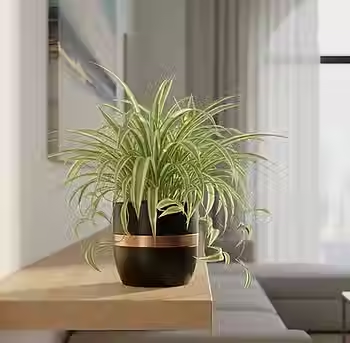
You might recognize Spider plants from your grandmother's house. There's a good reason they've stood the test of time (besides Grandma having excellent taste).
These guys are fast growers, produce adorable baby "spiderettes" you can propagate (aka plant babies you can gift to friends), and thrive without constant attention.
Their arching leaves with creamy stripes create an almost fountain-like effect that's cheerful, retro-cool, and gives serious '70s vibes—in the best possible way.
Care Tips for Your Prolific Pal:
Watering:
Spider plants like a weekly watering schedule that keeps the soil lightly moist.
They'll let you know they're thirsty if the leaf tips begin to brown, which is basically their passive-aggressive way of saying, "Ahem, excuse me, but could I trouble you for some water?"
Light:
They appreciate bright, indirect light and will reward you with faster growth and more babies. Lots and lots of babies.
Like, you might have too many babies. No such thing, you say? We'll see.😁
Temperature:
Room temperature is perfect—they're not fussy about warmth. They're the easy-breezy friend of the plant world.
Bonus Features:
The "spiderettes" dangle from the mother plant on long stems like tiny acrobats, and once they develop tiny roots, you can snip them off and pot them up.
Instant new plants! Your friends will either love you or start avoiding you because you keep showing up with plant babies.
5. Best Houseplant for Beginners:
Peace Lily (Spathiphyllum): The Drama Queen With a Heart (Oscar-Worthy Performances Daily)

Peace lilies look so fancy with their elegant white blooms (which are actually modified leaves—who knew?
They'll droop dramatically when thirsty, practically collapsing like a Victorian lady with the vapors, in a polite way of begging for water.
Give them a drink, and within hours, they'll perk back up like nothing happened, standing tall and proud as if to say, "Who, me? I wasn't that dramatic."
It's plant theater at its finest, and honestly, better than most reality TV.
Care Tips for Your Theatrical Beauty:
Watering:
They prefer consistently moist soil—don't let their roots dry out completely (they WILL let you know if you do).
Light:
Peace lilies thrive in medium to low light, making them perfect for offices, bathrooms, or that corner of your living room where nothing else will grow.
Humidity:
They appreciate a bit of humidity, so occasional misting or placement near a bathroom works wonderfully. They're basically asking for spa days.
Important Note:
Peace lilies are toxic to pets if ingested, so keep them out of reach of curious nibblers (looking at you, cats who knock things off counters for fun)
Bonus Features:
They're champions at purifying the air, removing pollutants like ammonia, formaldehyde, and benzene. Perfect for creating a calm, clean home environment.
Plus, those white blooms add a touch of elegance that feels luxurious, like your apartment is auditioning for Architectural Digest.
Essential Care Tips for Houseplant Success
(Because Even Easy Plants Need Some Attention)

✨Water Smart (Not Hard):
When in doubt, check the soil moisture before watering. Stick your finger about an inch deep, and if it's dry, water; if it's moist, wait.
Overwatering kills more houseplants than anything else! Yes, even more than that one time you forgot about it for three weeks.
✨Light Matters (Your Eyes Lie 😘):
Observe where you place your plants. What looks bright to your eyes may be too harsh (causing scorched leaves) or too dim (leading to leggy growth) for some plants.
✨Rotate Them:
Turn your plants occasionally (every week or two) to ensure all sides get even light and grow uniformly.
Otherwise, you'll end up with lopsided plants reaching desperately toward the window like they're trying to escape. Equal opportunity sunbathing!
✨Patience Is Key (They're Not Trying to Spite You):
Plants grow at their own pace—not yours. Celebrate the small wins, like a new leaf unfurling or vibrant color bouncing back.
Growth is slow in winter (they're basically hibernating) and faster in spring and summer (plant party time!). Your plant isn't being lazy; it's just conserving energy.
✨Don't Forget the Dust (Spa Day for Plants):
Wipe leaves with a soft, damp cloth occasionally to help plants absorb more light. Think of it as a spa day for your leafy friends.
Dusty leaves can't photosynthesize as efficiently—it's like trying to see through dirty glasses.
✨Drainage is Everything-E-v-e-r-y-t-h-i-n-g!
Always use pots with drainage holes. Sitting in waterlogged soil is a death sentence for most houseplants.
If you love a pot without drainage, use it as a decorative outer pot and keep your plant in a plastic nursery pot inside. It's like plant shapewear—functional, and nobody needs to know.
✨Feed Occasionally (But Don't Go Overboard):
During the growing season (spring and summer), a diluted liquid fertilizer once a month can give your plants a boost.
But don't overdo it—over-fertilizing can burn roots and cause more harm than good.
▪️ Final Thoughts -You've Got This!

Starting with these easygoing plants can make the experience of nurturing indoor greenery so rewarding.
Each has its own personality and care quirks, but they are all resilient and willing to put up with your learning curve.
Remember, every plant parent kills a plant or two along the way. Wah!😭
It's part of the learning process, not a personal failure or a sign that you're unfit for plant parenthood.

The key is to start simple, observe your plants (they're surprisingly chatty once you know their language), and adjust as you go.
Before you know it, you'll be eyeing more challenging varieties, joining plant Facebook groups at 2 AM, and wondering where you can fit just one more plant.
Spoiler: there's always room for one more. The ceiling has potential. Walls exist.
Your bathroom could use some greenery...
Happy planting, you future plant whisperer, you! 🌱
I hope you loved this one as much as I loved writing it. Plants are my happy place!
Which one is your favorite? Comment below⬇️ Did you pick more than one from this post to try? Is there anyone who hasn't had a plant?
xoxo,
Curated Lifestyle 💗


Comments